
Why Do We Believe in Wrong Things, and How Do We Stop Believing in Them?
Tarcísio Cardoso, Gustavo Amaral
InMediaciones de la Comunicación · DOI 10.18861/ic.2026.21.2.449
Tarcísio Cardoso
PhD
Gustavo Rick Amaral
PhD
Abstract
Peirce and Dretske help explain how we transform signs into beliefs and why correcting mistaken ideas requires looking at the same subject from multiple angles
Keywords: sign; belief; false; correction; conceptualization; collateral experience; Dretske; Peirce
Imagine a student in an art history class. The professor shows two Cubist paintings, and both happen to have a lot of red in them. The student leaves the class convinced that "Cubist paintings are red." He was not deceived by anyone. He simply drew a wrong conclusion from what he saw. It is in this simple, everyday manner that Tarcísio Cardoso (UFBA) and Gustavo Rick Amaral (UAM) begin to answer, in an article recently published in the journal InMediaciones de la Comunicación, an increasingly urgent question in the age of social media and artificial intelligence: how do we form our beliefs, and how can we correct them?
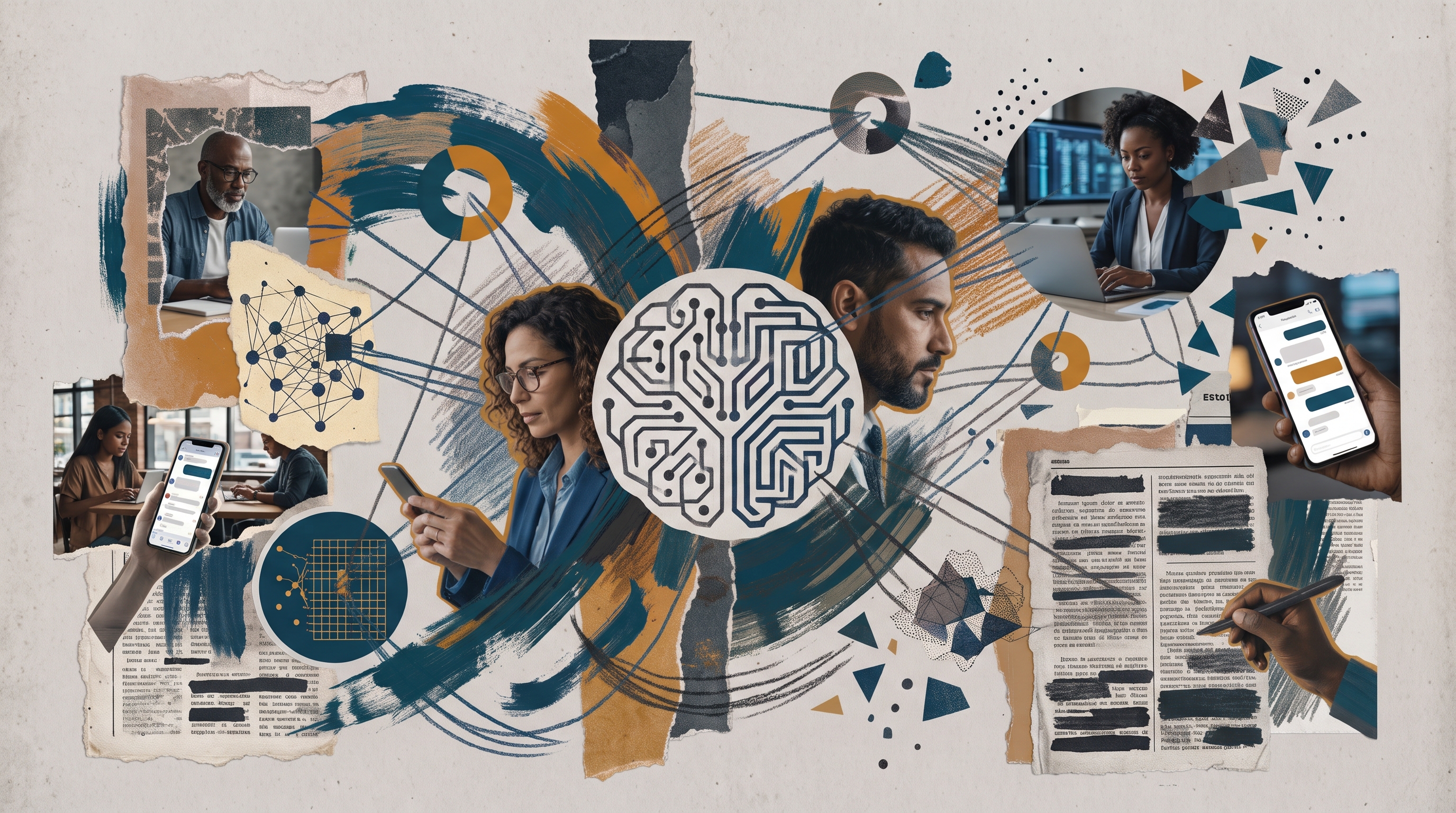
To answer this question, the authors bring together two philosophers. The American Fred Dretske explains the internal "step by step" of the mind. We receive a flood of information from the senses, such as colors, shapes, and sounds, and gradually organize them into concepts, such as "cubism." These concepts then guide our actions and become beliefs. Charles S. Peirce, the father of semiotics, shows that no sign functions on its own. Each image, word, or piece of news we receive connects to many others in a vast network of meanings.
The key to the article is a concept of Peirce's called collateral experience. This refers to everything we know and have experienced around a given subject: the context, the repertoire we already possess, and the other means of access to the same object. If the student visits an exhibition and sees Cubist paintings in blue, gray, and brown, he will notice the error and adjust his idea. The lesson extends well beyond the classroom. False beliefs are corrected when we view the same subject through several different paths, not when we remain confined to a single source. In times of digital bubbles and disinformation, this is a valuable clue for understanding how we arrive at knowledge.
CARDOSO, T. S.; AMARAL, G. R. From Sign to Concept and Belief: A Semiotic-Cognitive Approach Based on Peirce and Dretske. InMediaciones de la Comunicación, v. 21, n. 2, 2026.
Access: https://doi.org/10.18861/ic.2026.21.2.449
InMediaciones de la Comunicación